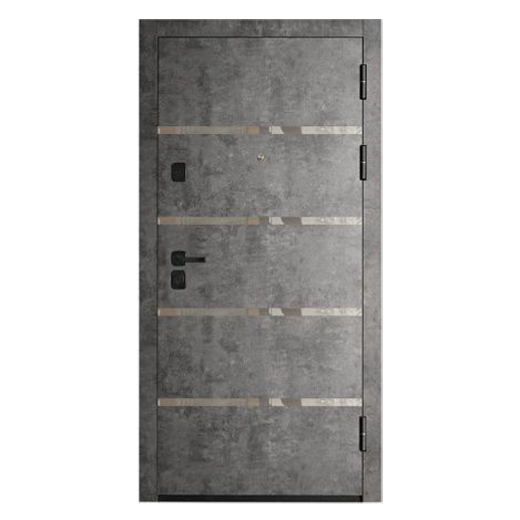
How Are Metal Italian Doors Really Made
How Are Metal Italian Doors Really Made—and Why Do They Transcend Mere Function?
Walk through the historic center of Florence, Milan, or Verona, and you’ll notice something quietly extraordinary: the front doors. Not just entrances, but sculptures in steel and bronze, bearing the weight of centuries in their hinges and the soul of Italy in their curves. These are not mass-produced panels stamped out in a factory—they are bespoke metal doors, forged at the intersection of Renaissance artistry and 21st-century engineering.
But how are they truly made? What invisible layers of skill, science, and stubborn perfectionism go into a single door? And why—when cheaper alternatives abound—do architects and discerning homeowners still commission these masterworks? Let’s step beyond the surface and into the heart of a tradition that refuses to be automated away.
What Exactly Is a “Metal Italian Door”—And Why Does “Italian” Carry So Much Weight?
To call it a “metal door” is like calling a Stradivarius a “wooden instrument.” The term porta metallica italiana implies far more than material—it signals a philosophy of making rooted in saper fare (“knowing how to do”) and cura maniacale (“maniacal care”).
Technically, it refers to a custom-engineered entrance system typically composed of:
- A structural frame in cold-rolled steel (1.5–4 mm thick),
- Decorative cladding in hand-forged wrought iron, cast bronze, or machined stainless steel,
- An insulated core (polyurethane or mineral wool) for thermal and acoustic performance,
- Integrated security hardware meeting European RC3–RC6 burglary resistance standards.
But the “Italian” distinction lies deeper: in the refusal to separate beauty from function, the insistence that a lock mechanism should be as elegant as the scrollwork around it, and the belief that a door should age like fine leather—not peel like cheap paint. This isn’t manufacturing. It’s material storytelling.
How Does the Design Phase Blend Architecture, Security, and Soul?
Unlike industrial doors conceived in spreadsheets, an Italian metal door begins as a dialogue—between architect, client, artisan, and sometimes even the building’s history.
The process unfolds in layers:
- Architectural Integration: The door isn’t inserted into the façade; it’s co-designed with it. Proportions follow golden ratios; reveals align with stone joints; hardware echoes window ironwork.
- Performance Specification: Engineers define non-negotiables:
- U-value ≤ 1.3 W/m²K (for passive-house compliance),
- Sound reduction index (Rw) ≥ 42 dB,
- Resistance to 10+ minutes of forced entry (EN 1627 RC4).
- Artistic Interpretation: The maestro battitore (master metalworker) translates motifs—perhaps a Medici fleur-de-lis or a Venetian wave—into three-dimensional metal, ensuring every curve flows with structural logic, not just ornament.
A single design may undergo three full-scale mock-ups—in cardboard, then MDF, then steel—before metal is ever cut. Because in Italy, you don’t prototype to save time. You prototype to eliminate regret.
What Raw Materials Are Chosen—and Why Is Provenance Non-Negotiable?
In Italian metalworking, material is moral. You don’t just buy steel—you select it like a winemaker chooses grapes.
- Steel: Only cold-rolled, low-carbon steel (DC04 or S355J2) is used—never hot-rolled or recycled scrap with unpredictable sulfur content. Why? Because impurities cause micro-cracking during welding or warping during thermal cycling. Sheets arrive with mill certificates tracing carbon, manganese, and tensile strength to the batch.
- Bronze: True artisans use CuSn8 (92% copper, 8% tin)—not “bronze-finish” alloys. This composition ensures a stable patina that deepens over decades, not green corrosion that flakes. Some workshops even source copper from historic church roofs, melted and recast with reverence.
- Wrought Iron: Rare today, but when used, it’s reprocessed bloomery iron—fibrous, slag-included, and nearly impossible to machine, but unmatched in tensile resilience. It’s the metal of cathedrals, not catalogs.
- Insulation: Closed-cell polyurethane foam is injected under pressure to fill every cavity, achieving λ = 0.022 W/mK—critical for eliminating thermal bridges.
As one Milanese fabbro told me: “If you wouldn’t trust it to hold your child’s swing, don’t use it in a door.”
How Is the Structural Frame Fabricated—And Why Is Tolerance a Form of Respect?
The frame is the door’s skeleton—hidden but vital. Its fabrication is a ballet of precision and restraint:
-
Cutting:
- 5-axis waterjet cutting (not laser) is preferred for intricate profiles. Why? Lasers introduce a heat-affected zone (HAZ) that hardens the steel edge, making it brittle. Waterjets cut cold, preserving metallurgical integrity—especially critical for subsequent bending.
-
Forming:
- CNC press brakes with servo-electric backgauges achieve bend angles within ±0.25°. For arched tops, incremental rotary draw bending uses custom dies to prevent wall thinning on the outer radius.
-
Welding:
- Pulsed TIG (GTAW) is used exclusively—never MIG. The pulsed current minimizes heat input, reducing distortion. Welders work in clean-room conditions to avoid porosity from airborne contaminants.
- Internal stiffening ribs are welded in a balanced sequence (like tightening a cylinder head) to counteract residual stresses.
-
Stress Relief:
- Large doors (>2.4 m) undergo oven stress-relieving at 550–650°C, followed by slow cooling. This isn’t optional—it prevents creep deformation over decades.
A tolerance of ±0.5 mm across a 3-meter height isn’t just impressive—it’s a promise that the door will close silently, seal perfectly, and never bind.
How Are Decorative Elements—Forged Scrolls, Cast Handles, Inlaid Motifs—Truly Integrated?
Here, engineering yields to poetry—but never abandons it.
-
Hand-Forging (La Battitura a Freddo e a Caldo):
Iron bars are heated to 900–1100°C in gas forges (coal is rare now, for emissions control). The battitore shapes them over custom anvils, using hammers whose weights and faces are chosen for each curve. A single scroll may be drawn, twisted, and tapered in 12 passes. Crucially, forging aligns the grain structure, making the metal stronger along the curve—unlike bent rod, which is weak at the apex. -
Lost-Wax Bronze Casting (La Fusione a Cera Persa):
A beeswax model is hand-sculpted, then encased in silica-based ceramic slurry. After dewaxing at 700°C, molten bronze (1100°C) is poured under vacuum to eliminate bubbles. The resulting casting captures fingerprints in the wax—a deliberate trace of the maker. -
Chasing & Repoussé (La Lavorazione a Martello):
Using hundreds of tiny punches, artisans raise and refine relief patterns from the reverse (repoussé) and front (chasing). This isn’t stamping—it’s sculpting metal like clay, with each tap calibrated by ear and feel. -
Mechanical Inlay (L’Intarsio Metallico):
Brass or silver wires are press-fit into precision-milled grooves, then peened at the edges to lock them in place—no adhesives. Over time, differential thermal expansion actually tightens the bond.
This work cannot be rushed. A single door may absorb 200+ hours of hand labor—not as inefficiency, but as investment in permanence.
What Hidden Engineering Lives Behind the Beauty—Security, Thermal Breaks, Acoustics?
Beneath the artistry lies a fortress in disguise:
-
Thermal Break Technology:
Interior and exterior steel skins are separated by 25–40 mm polyamide struts (not PVC, which degrades). These struts are mechanically crimped, not glued, ensuring long-term shear resistance. The result? Surface temperatures on the interior stay within 2–3°C of room air—even when it’s -10°C outside. -
Multi-Point Locking System:
A single turn of the handle engages 3–5 deadbolts (top, bottom, sides) into reinforced steel keepers embedded in the jamb. The lock cylinder is shielded by a hardened steel anti-drill plate (58–62 HRC), and the entire mechanism is housed in a removable security cassette for future upgrades. -
Acoustic Labyrinth Seals:
Instead of simple foam, doors use triple-lip EPDM gaskets with staggered compression zones. When closed, they create a serpentine path that dissipates sound energy—achieving Rw = 45 dB, enough to mute city traffic to a whisper. -
Anti-Lift Hinges:
Concealed hinges feature vertical steel pins that extend 50 mm into the frame. Even if the hinge screws are removed, the door cannot be lifted off.
Every element is tested not just to standards—but beyond them. Because in Italy, compliance is the floor, not the ceiling.
How Are Finishes Applied—And Why Do They Age with Grace, Not Decay?
Finishing is where chemistry becomes alchemy:
-
Surface Activation:
After shot blasting to Sa 2.5 cleanliness, the steel undergoes zirconium nano-ceramic conversion coating—a chrome-free alternative that creates a crystalline layer for superior adhesion. -
Powder Coating:
A hybrid epoxy-polyester powder (80–100 µm) is applied electrostatically, then cured at 190°C for 15 minutes. Unlike liquid paint, it forms a monolithic film with no solvents to outgas or blister. -
Artisanal Patination (For Bronze/Iron):
- Bronze: Treated with ammonium sulfide and cupric nitrate to accelerate natural oxidation, creating a stable verdigris that deepens over decades.
- Iron: Hand-rubbed with microcrystalline wax and linseed oil, then buffed to a soft luster that repels moisture without sealing the metal’s “breath.”
-
PVD (Physical Vapor Deposition):
For modern finishes like “black titanium” or “rose gold,” the door is placed in a vacuum chamber where metal ions are plasma-deposited at the atomic level. The result is a 2–4 µm coating harder than sapphire (2,000+ HV), yet warm to the touch.
These finishes don’t hide the metal—they reveal its character over time.
How Is Final Validation Done—Beyond Checklists and Certificates?
Certifications (EN 1627, ISO 9001) are table stakes. True validation is tactile and temporal:
- Air Infiltration Test: The door is mounted in a test rig and subjected to 600 Pa pressure (equivalent to 120 km/h wind). Smoke pencils trace any leakage—none should appear.
- Cycle Testing: The door undergoes 150,000 open/close cycles with full lock engagement—simulating 50 years of use.
- Thermal Imaging: After 24 hours in a climate chamber (-10°C outside, +20°C inside), an IR camera confirms no cold spots at joints or hardware.
- The Master’s Eye: Finally, the capo officina inspects the door at dawn light, when raking angles reveal the slightest weld ripple or finish flaw. If his hand hesitates, the door returns to the bench.
Only then is it signed, crated in climate-controlled wooden crates with humidity indicators, and shipped—not as cargo, but as legacy.
Why Can’t This Be Replicated by Automation or Offshore Production?
Because craft is embodied knowledge. A robot can bend steel to 0.1 mm tolerance—but it cannot feel when the iron is at the perfect forging heat by the color of its glow. It cannot decide, mid-stroke, to soften a curve because it “doesn’t sing.”
Italian workshops thrive on vertical integration: the same hands that design the scroll also forge it, weld it, and finish it. This continuity ensures that intent survives execution. Offshore factories, by contrast, fragment the process—design in Milan, forging in Asia, assembly in Germany—losing the dialogue between stages.
Moreover, Italian makers reject economies of scale. They’d rather produce 50 perfect doors a year than 500 “good enough” ones. As one artisan in Brescia put it: “We don’t sell doors. We sell peace of mind—with a signature.”
What’s Evolving—Without Losing the Soul?
Tradition isn’t stagnation. Today’s workshops quietly innovate:
- Digital Heritage: 3D laser scanning captures historic doors for faithful restoration—down to the hammer marks.
- Sustainable Metallurgy: Bronze is now 95% recycled, melted in induction furnaces powered by renewable energy.
- Smart Integration: Wiring channels for biometric locks or video intercoms are cast into the frame—completely invisible.
- Modular Jams: Pre-finished, insulated door frames reduce on-site labor while preserving bespoke aesthetics.
Yet the core remains: a door should protect, inspire, and endure—not just open and close.
So—Why Invest in a Metal Italian Door?
Because it answers three timeless human needs:
- Security—not just against intruders, but against time, weather, and decay.
- Beauty—not as decoration, but as daily ritual: the weight of the handle, the whisper of the seal, the patina that tells your story.
- Legacy—these doors outlive their owners, becoming heirlooms passed to grandchildren who’ll wonder at the hand that shaped them.
In a world of disposable design, a true Italian metal door is a quiet rebellion—a testament to the idea that some things should be made slowly, beautifully, and to last.
And when you close one behind you, you don’t just shut a door.
You seal a promise—to craftsmanship, to home, to what endures.

Which Material Is Truly Best for Exterior Door
US 2025 Trusted Wood Door Brands
Related Article