
Why WPC Doors Are a Game-Changer for Commercial Applications
author: CHEN
2025-04-14
As businesses and industries increasingly look for sustainable, durable, and cost-effective solutions for their commercial doors, Wood Plastic Composite (WPC) doors have emerged as a top choice. With the growing demand for these doors, understanding the WPC door production line becomes critical for manufacturers and buyers alike. This guide will walk you through everything you need to know about WPC door production lines, from the technology and machinery involved to the benefits of using WPC doors for your commercial projects.
What Makes WPC Door Production Lines Essential for Modern Manufacturing?
The demand for WPC doors has surged due to their robust performance, sustainability, and aesthetic appeal. But what makes the WPC door production line so crucial to the manufacturing process?
A WPC door production line is designed to create doors with high precision, cost-efficiency, and scalability. The production line is integrated with cutting-edge technologies that not only enhance the manufacturing process but also ensure that every door produced meets stringent quality standards. For businesses looking to meet large-scale production needs while minimizing waste, these automated production lines offer significant benefits, ensuring high productivity and uniformity with each batch.
The Equipment and Technology Behind WPC Door Production Lines
The efficiency and consistency of WPC door production lines rely heavily on the state-of-the-art machinery used in the process. Let’s explore the key equipment involved:
- Extrusion Machines: These machines are responsible for shaping the WPC mixture into the desired form. The extruders create a consistent profile that is perfect for door panels.
- Cutting Tools: Precision cutting tools ensure that the panels are sized correctly, whether for standard doors or custom designs.
- Lamination Machines: To give WPC doors their sleek, modern look, lamination presses apply decorative finishes that can mimic wood grain, giving doors the look of natural wood while enhancing durability.
- UV Curing Stations: These stations ensure that the door surfaces are properly cured for long-lasting protection against UV rays, maintaining the door's aesthetic quality over time.
- Automated Quality Control Systems: These systems check the doors at various stages of production, ensuring that each door meets the required standards for size, finish, and quality.
Each piece of equipment plays a crucial role in ensuring that the WPC doors are produced with optimal quality and efficiency, allowing manufacturers to scale production without compromising on standards.
The WPC Door Production Process: Step-by-Step Overview
Understanding the process of how WPC doors come to life is essential for buyers. Let’s break it down into a clear, structured process:
1. Raw Material Preparation: The first step involves selecting the raw materials—wood fibers, plastic resins, and additives. These are the core ingredients that make WPC doors strong, durable, and eco-friendly.
2. Compounding: In this stage, the raw materials are mixed to create a homogeneous compound. The right ratio of wood fibers and plastic is crucial for the strength and appearance of the final product.
3. Extrusion/Injection Molding: The compounded material is then passed through an extruder or injection mold, which shapes the material into door panels of the desired size and thickness.
4. Lamination and Finishing: The panels are then laminated with a decorative surface that gives them an attractive finish, such as wood-like textures or other aesthetic patterns. This stage is key for visual appeal, particularly for commercial properties seeking custom designs.
5. Quality Control: At various points in the production process, quality control tests are carried out to ensure that the panels meet strength, moisture resistance, and finish standards. This ensures consistency across every batch of doors.
Why WPC Doors Are a Game-Changer for Commercial Applications
WPC doors have quickly become a top choice for commercial projects. Here's why:
1. WPC doors are designed to withstand various environmental conditions, making them ideal for high-humidity areas like bathrooms or kitchens, and for buildings exposed to harsh weather conditions.
2. Unlike traditional wooden doors, WPC doors are resistant to scratches, dents, and fading, making them perfect for high-traffic commercial spaces such as offices, hotels, and shopping malls.
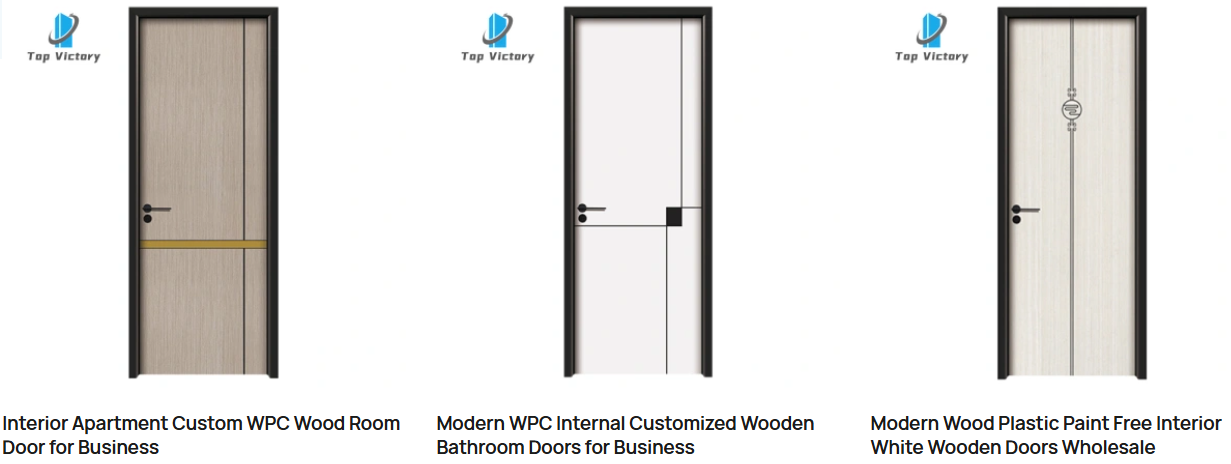
3. WPC doors offer superior customization capabilities, from various sizes and finishes to custom branding, making them a versatile choice for commercial buildings seeking unique design elements.
4. WPC doors do not require frequent maintenance. Their weather-resistant properties help retain their aesthetic appeal for a longer period compared to traditional doors.
Quality Control in WPC Door Production
For B2B buyers, quality assurance is a major factor when considering a door manufacturer. During the WPC door production process, quality control is integrated into every stage, from the moment the raw materials are prepared to the final product inspection.
- Dimensional Accuracy: Ensuring that the doors are cut to the correct size to fit the frame and meet customer specifications.
- Impact Testing: WPC doors are subjected to impact tests to verify their resistance to physical forces.
- Moisture Resistance Testing: As WPC doors are often used in environments with high humidity, they undergo moisture resistance tests to ensure that they maintain their strength and appearance even in challenging conditions.
- UV Testing: WPC doors are subjected to UV radiation testing to ensure that the lamination does not degrade under sunlight exposure.
This multi-stage quality control process ensures that every WPC door leaving the production line is of the highest quality, reducing returns and ensuring customer satisfaction.
How WPC Door Production Lines Maximize Efficiency and Reduce Costs
Investing in a WPC door production line can significantly reduce costs while improving production speed. Here's how:
- High-Speed Production: With automated processes, WPC door production lines can produce doors quickly and efficiently, increasing output without sacrificing quality.
- Material Optimization: Advanced systems are designed to use raw materials efficiently, minimizing waste during production and ensuring that materials are used to their fullest potential.
- Automation Reduces Labor Costs: Automation in the production line helps reduce labor costs and the risk of human error, allowing manufacturers to focus on scaling operations rather than managing labor-intensive tasks.
- Long-Term Cost Benefits: Although the initial investment may be significant, the cost-saving benefits over time—through faster production, less material waste, and reduced labor costs—make the WPC door production line a valuable asset for manufacturers.
Customizing Your WPC Doors Meeting Specific Commercial Demands
Customization is key in the commercial door market. WPC door production lines allow businesses to:
- Offer custom sizes and shapes: Whether it's a custom-sized door for a specific commercial space or a door designed to fit unique frame dimensions, WPC doors offer flexibility in design.
- Various finishes: From glossy to matte, wood-like finishes to vibrant colors, WPC doors can be tailored to meet specific branding requirements for commercial spaces.
- Branding opportunities: Businesses can incorporate logos, custom patterns, and other branding elements to make the doors align with the overall design and branding of the property.
This level of customization makes WPC doors the ideal solution for businesses in the hospitality, retail, and commercial office industries.
Eco-Friendly Manufacturing
Sustainability is a key concern for many modern businesses. WPC doors offer a greener alternative to traditional materials, with several eco-friendly advantages:
- Recycled Materials: WPC doors are made using a blend of recycled wood and plastic, reducing the demand for virgin raw materials and helping to minimize environmental impact.
- Low Carbon Footprint: The production of WPC doors requires less energy compared to traditional door manufacturing processes, contributing to a lower overall carbon footprint.
- Low Carbon Footprint: The production of WPC doors requires less energy compared to traditional door manufacturing processes, contributing to a lower overall carbon footprint.
- Durability Reduces Waste: Due to their long-lasting durability, WPC doors require fewer replacements, which further reduces waste in the long term.
For businesses committed to sustainability, WPC doors are an excellent choice for both their environmental and practical benefits.
Market Demand for WPC Doors in Commercial Spaces
The demand for WPC doors has been rising, driven by trends in both sustainability and durability. Commercial buildings, such as hotels, offices, retail spaces, and hospitals, are increasingly adopting WPC doors for their superior performance and long lifespan. The ability to customize these doors further enhances their appeal, allowing businesses to maintain a sleek, modern look while meeting functional needs.
As the market continues to prioritize eco-friendly solutions, WPC doors are expected to remain a top choice for both new constructions and renovations.
Is Investing in a WPC Door Production Line Right for Your Business?
For businesses considering expanding their door manufacturing operations, investing in a WPC door production line can be a game-changer. When evaluating the ROI of such an investment, consider factors like:
- Production capacity: Can your existing operation handle the increased volume?
- Customization options: Can your production line meet the growing demand for custom-designed doors?
- Upfront costs vs. long-term savings: While initial costs may be high, the savings over time in labor, materials, and operational efficiency can provide significant returns.
- Customization options: Can your production line meet the growing demand for custom-designed doors?
- Upfront costs vs. long-term savings: While initial costs may be high, the savings over time in labor, materials, and operational efficiency can provide significant returns.
For businesses that want to remain competitive in the door manufacturing industry, investing in a WPC door production line is a strategic decision that offers both operational and financial advantages.
With growing demand for WPC doors, investing in a WPC door production line is an essential move for businesses looking to scale, improve quality, and stay ahead of market trends. The combination of efficiency, customization, sustainability, and cost savings makes this production method a smart choice for any commercial manufacturer.
Ready to explore how WPC doors can enhance your production process? Contact us to learn more about our advanced production lines and how they can meet your specific needs.
The Journey of a WPC Door From Raw Materials to Finished Product
How's the WPC Door Production Lines
Related Article

The vast majority of door noise comes from one simple issue: metal-on-metal friction. Over time, the lubricant that was applied at the factory wears off. Dust, dirt, and moisture get into the knuckles of the hinge—the cylindrical parts that pivot around the pin—and create a grinding, squeaking sound as the door moves.
What Actually Causing My Door to Make Noise

Sometimes, the issue is as simple as loose screws; other times, it’s years of wear, humidity-induced warping, or poor installation. But nearly every noisy door can be tamed—with patience and the right approach.
Why Do Doors Make Noise in the First Place

Think of the coating as your door’s immune system. It’s the first and only line of defense against moisture, UV radiation, temperature swings, and physical abrasion. If it’s weak, thin, or poorly bonded, the underlying steel is exposed—and once rust begins, it spreads beneath the surface, often unnoticed until it’s too late.
Why Does the Coating on a Metal Door Matter So Much
