
What Raw Materials Are Used in Italian Metal Door Production
What Raw Materials Are Used—and Why Does Purity Matter in Italian Metal Door Production?
In Italy, a metal door is never just a barrier. It is a threshold between eras—a fusion of Renaissance artistry and modern engineering, forged to endure centuries of sun, salt, and human passage. Walk through the cobbled lanes of Siena or the sleek courtyards of Milan, and you’ll see doors that gleam with quiet authority: seamless welds, hand-rubbed finishes, profiles that seem carved from light itself.
But this elegance is not accidental. It begins long before the artisan’s hammer strikes—deep in the chemistry of the metal itself. So what raw materials do Italy’s finest workshops truly rely on? And why do they treat trace elements like moral imperatives? Let’s step beyond the surface and into the soul of the alloy.
What Metals Actually Define the Character—and Performance—of an Italian Metal Door?
To speak of “metal doors” in Italy is to overlook a profound material hierarchy. The choice of base metal is a philosophical and functional decision, shaped by climate, architecture, security needs, and aesthetic lineage.
Stainless Steel: The Guardian of Time
While AISI 304 (1.4301) and 316 (1.4401) are standard references, Italian fabricators understand that not all 304 is equal. True architectural-grade stainless must meet EN 10088-2 with tight control over interstitial elements:
- Carbon ≤ 0.030% (not just ≤0.08%) to avoid sensitization during welding
- Nitrogen ≥ 0.10% to enhance pitting resistance without nickel inflation
- Molybdenum ≥ 2.0% in 316L for chloride environments like Venice or the Amalfi Coast
This isn’t specification pedantry—it’s the difference between a door that develops rust halos around fasteners in five years and one that remains pristine for fifty.
Aluminum: The Poet of Lightness
Alloys like 6060 (EN AW-6060) and 6082 (EN AW-6082) dominate for extruded frames, but Italian workshops demand T651 temper with controlled quench rates to minimize residual stress. Why? Because uneven stress causes distortion during CNC machining—ruining the hairline tolerances required for flush-mounted glazing or hidden hinges.
Moreover, they specify primary aluminum (P1020A) over recycled scrap when surface finish is critical. Recycled content, while sustainable, often carries iron-silicon intermetallics that scatter light under anodizing, creating a “cloudy” appearance that betrays luxury.
Carbon Steel: The Hidden Spine
Used internally for reinforcement or in heritage reproductions, S355J2+N (normalized fine-grain steel) is preferred over S235 for its superior through-thickness ductility and lower susceptibility to lamellar tearing during fillet welding. But crucially, it must be hot-dip galvanized to EN ISO 1461 with a minimum 85 µm coating—then powder-coated with polyester TGIC for UV stability.
Leave it to chance, and moisture wicks into micro-gaps, causing crevice corrosion that swells the frame from within—silent, invisible, and irreversible.
Bronze & Brass: The Whisper of History
For ecclesiastical or villa commissions, CuSn6 (phosphor bronze) or CW614N (admiralty brass) are hand-forged into handles and scrollwork. These aren’t chosen for strength but for patina kinetics: how they evolve from golden luster to deep umber over decades of touch. Impurities like lead >0.5% accelerate dezincification in brass, causing powdery decay—unacceptable in a door meant to outlive its commissioner.
Why Does “Purity” Go Far Beyond Alloy Grade—and Into the Realm of Metallurgical Ethics?
Because in high-end Italian fabrication, the alloy grade is merely the starting point. What matters is the microchemical reality of the melt.
Consider stainless steel: the PREN (Pitting Resistance Equivalent Number)—calculated as %Cr + 3.3×%Mo + 16×%N—is a useful index, but it assumes homogeneity. In reality, microsegregation during solidification can create chromium-depleted zones near grain boundaries, even in “316L.” Only low-sulfur melts (<0.005%) and argon-oxygen decarburization (AOD) refining minimize this risk.
Similarly, in aluminum, hydrogen content must be kept below 0.15 mL/100g via rotary degassing. Excess hydrogen forms microporosity during solidification, which becomes stress concentrators during bending—leading to hairline cracks that propagate under cyclic wind loads.
Italian workshops don’t trust mill certificates alone. They perform spark-OES (Optical Emission Spectrometry) on every batch, not just to verify bulk composition, but to detect tramp elements:
- Copper from mixed scrap → galvanic corrosion when in contact with stainless fasteners
- Tin or antimony → hot shortness during welding
- Bismuth → catastrophic embrittlement at grain boundaries
To them, purity isn’t a technical spec—it’s a covenant with time.
How Do Italian Ateliers Turn Raw Metal Into a Legacy—One Verified Ingot at a Time?
The process begins not at the bench, but at the supplier gate. Reputable Italian fabricators maintain approved mill lists—often limited to three or four European producers known for closed-loop scrap control and continuous casting with electromagnetic stirring (to reduce macrosegregation).
Upon delivery:
- Each coil or bar is tagged with heat number, rolling direction, and coil position (head, middle, tail—properties vary).
- Cross-sectional samples are taken for metallography: etched in Marble’s reagent (for stainless) or Keller’s (for aluminum) to reveal grain structure and inclusion morphology.
- Ultrasonic testing checks for laminations or voids invisible to the eye.
- Mechanical coupons are tensile-tested to verify yield strength and elongation—because overstabilized steel may meet chemistry but lack ductility.
This isn’t quality control—it’s material stewardship. A door fabricated today may be inspected by a conservator in 2124; the workshop must be able to prove, through logs and samples, that the metal was sound at birth.
What Silent Failures Lurk Beneath Impure Alloys—Even When the Door Looks Perfect?
The most dangerous flaws are those that manifest years later, long after the invoice is paid.
- Sulfide inclusions in stainless steel act as cathodic sites in humid air. Over time, they initiate crevice corrosion under gaskets or sealants—visible only as a faint stain until the frame section is compromised.
- Excess iron in aluminum forms Al₃Fe platelets that align during extrusion. When the profile is bent, these brittle phases cleave along the deformation plane, causing delayed cracking under thermal cycling.
- Residual stresses from uneven cooling cause springback after machining, leading to misaligned lock bores—a nightmare for high-security multi-point locking systems.
In one documented case near Genoa, a luxury villa’s “marine-grade” door developed intergranular attack within three years—not because it wasn’t 316, but because the mill used high-sulfur scrap to cut costs. The sulfur wasn’t flagged in the certificate, but it was lethal in the Ligurian mist.
How Does Material Purity Dictate the Very Language of Surface Finishing?
In Italy, finishing isn’t concealment—it’s revelation. A hand-polished stainless surface doesn’t hide the metal; it amplifies its truth.
- Inclusions larger than 10 µm scatter light, creating “comet tails” under directional lighting—unacceptable in a door priced at €30,000.
- Grain flow inconsistency causes differential etching during satin brushing, resulting in visible bands that disrupt visual harmony.
- Surface oxides from improper annealing prevent uniform anodizing, yielding a mottled appearance that no dye can mask.
Master finishers in Florence or Brescia know: you cannot polish away a metallurgical sin. The metal must be born pure, homogenized, and stress-relieved—only then can the artisan’s skill shine.
Why Is This Obsession with Purity Uniquely Italian—and Not Just Engineering Overkill?
Because Italian metalwork is cultural memory made tangible. These doors are installed in buildings that survived earthquakes, wars, and empires. They are expected to endure not just weather, but history.
Moreover, Italy’s microclimatic extremes demand uncompromising material science:
- Venice: Chloride-laden aerosols require Mo-stabilized austenitics with ultra-low S.
- Rome: Sulfur dioxide from traffic accelerates acid rain corrosion—demanding high-Cr, low-C steels.
- Alpine regions: Thermal cycling from -20°C to +40°C demands materials with matched CTE (coefficient of thermal expansion) across assemblies.
In mass markets, “good enough” suffices. In Italy, good enough is a betrayal of legacy.
How Is Sustainability Reshaping—Not Compromising—Material Purity?
Today’s Italian workshops embrace circularity—but never at the cost of integrity. They use:
- Hydro-reduced aluminum from renewable-powered smelters (e.g., ELYSIS technology), ensuring low hydrogen and iron.
- Scrap-sorted stainless via AI-powered optical sorting, keeping copper and zinc contamination below 200 ppm.
- Digital material passports that track embodied carbon and chemistry from melt to installation.
Purity and sustainability are no longer opposites—they are two strands of the same ethical fiber.
So—Why Should You Care What’s Inside the Metal?
Because a door is the first handshake between a building and the world. If it sags, stains, or corrodes, it whispers doubt about everything behind it.
Choosing a high-purity, verified alloy isn’t about paying more—it’s about refusing to pay later in repairs, reputational damage, or lost heritage. It’s understanding that true luxury lies not in ornament, but in invisible excellence.
And in Italy, where every craftsman knows that beauty must be earned—not applied—they forge that excellence into the very atoms of the metal.
That’s why, when you stand before an Italian metal door, you’re not just seeing steel or aluminum.
You’re witnessing a covenant between chemistry, craft, and time—sealed in purity, and built to last.
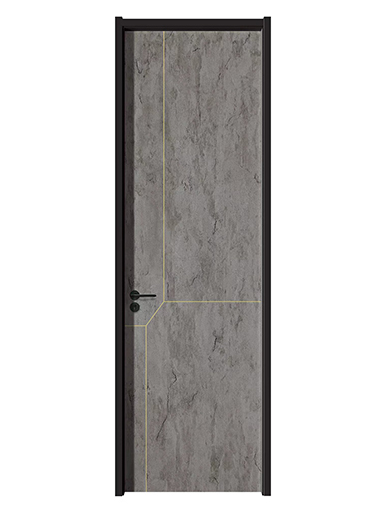
Purity Matter in Metal Italian Door Production
How to Choose a Good-Quality Metal Italian Door
Related Article