
Layers Beneath the Surface of Italian Metal Doors
What Gives Italian Metal Doors Their Soul? Unpacking the Layers Beneath the Surface
You’ve seen them—the grand iron portals of a Venetian palazzo, the sleek bronze entry of a Milanese penthouse, the weathered steel gate guarding a Tuscan villa. They don’t just look timeless; they feel alive. But that enduring presence isn’t magic. It’s the result of a meticulously orchestrated sequence of surface treatments—a dialogue between ancient intuition and modern science, where every micron of coating serves both beauty and survival.
So what really happens between raw metal and finished masterpiece? Let’s step inside the workshops and labs where Italian doors earn their legacy.
Why Is Surface Treatment for Italian Doors More Than Just “Painting Metal”?
Because in Italy, a door isn’t a commodity—it’s a cultural artifact. And treating its surface like a commodity is how you get peeling, rust bleeding through ornamental scrolls, or finishes that bleach white after one summer in Sardinia.
True surface engineering for Italian metal doors begins with a fundamental truth: metal is reactive. Left bare, steel oxidizes, aluminum pits, and copper tarnishes—not as flaws, but as natural processes. The role of surface treatment isn’t to deny this reality, but to orchestrate it—slowing degradation, enhancing patina, and ensuring that the door ages with dignity, not decay.
This demands more than a spray booth. It requires a systems approach: mechanical preparation, chemical passivation, electrochemical protection, and aesthetic finishing—all calibrated to the door’s alloy, geometry, and intended environment. Skip one layer, and the entire system unravels.
What Hidden Rituals Prepare the Metal Before a Single Coat Is Applied?
Long before color touches the surface, the metal undergoes a purification and activation sequence that would rival a Renaissance alchemist’s workshop. This isn’t cleaning—it’s surface rebirth.
First, alkaline immersion degreasing at 60–70°C strips away rolling oils, fingerprints, and fabrication residues—contaminants invisible to the eye but catastrophic for adhesion. Then comes abrasive blasting, not with random grit, but with precisely graded angular steel shot (SA 2.5 standard per ISO 8501-1), creating a uniform anchor profile of 50–75 microns. This isn’t roughness for roughness’ sake; it’s a micro-landscape engineered to mechanically lock the primer into place.
For ornate forged iron—where scrolls, leaves, and hinges trap debris—manual brushing with brass or stainless wire follows, often by artisans who’ve spent decades learning how to clean without erasing detail. Only then is the surface ready for its chemical transformation.
How Do Italian Workshops Chemically “Tame” Reactive Metal Without Poisoning the Earth?
Here’s where tradition meets regulation. Historically, chromic acid baths gave steel and aluminum near-immortal passivation—but hexavalent chromium (Cr⁶⁺) is now banned under EU REACH for its carcinogenicity.
Modern Italian foundries have responded not with compromise, but with innovation. They’ve embraced trivalent chromium (Cr³⁺) conversion coatings—less toxic, equally effective—or gone further: chromium-free zirconium/titanium oxide nano-ceramic treatments that form a 50–200 nm amorphous layer through sol-gel chemistry.
For carbon steel doors, zinc or manganese phosphating remains king. Immersed in heated acidic solutions, the metal surface grows a crystalline phosphate layer—zinc phosphate for general use, manganese for high-wear zones like hinges. This layer isn’t just a barrier; it’s electrochemically sacrificial, preferentially corroding to protect the base metal.
And critically, every bath is continuously monitored—pH, temperature, ion concentration—because in surface science, a 0.5 pH shift can mean the difference between decades of protection and premature failure.
Why Is the Primer the Unsung Hero of Door Longevity?
Because the topcoat gets the applause, but the primer does the heavy lifting. In high-end Italian production, primers aren’t generic—they’re tailored defense systems.
For coastal installations (think Amalfi or Liguria), a zinc-rich epoxy primer (80% zinc by weight in dry film) provides cathodic protection: the zinc sacrificially corrodes, shielding the steel even at scratch sites. Film thickness is tightly controlled—typically 60–80 µm DFT (dry film thickness)—measured by magnetic gauges after curing.
In urban or alpine settings, a two-component polyamide-cured epoxy offers superior chemical and abrasion resistance, especially under frequent handling. These primers are often pigmented with micaceous iron oxide (MIO), whose platelet structure creates a labyrinthine barrier that slows moisture penetration like microscopic roof shingles.
And here’s the secret: Italian workshops never rush curing. Primers are baked at 80–120°C for 20–40 minutes—not just to dry, but to achieve full cross-linking density. Under-cured primer is a time bomb.
How Do Italian Craftsmen Turn Industrial Coatings Into Works of Art?
This is where engineering surrenders to poetry. While powder coating dominates for durability, Italian artisans refuse to let uniformity erase character. They manipulate industrial processes to achieve controlled imperfection.
- Antique powder effects: By blending standard polyester powders with textured or wrinkled formulations, then partially masking during curing, they create surfaces that mimic hand-rubbed oil paint or aged bronze.
- Multi-layer glazing: A base coat of matte black powder is followed by a translucent brown or copper glaze, hand-wiped to reveal highlights on raised details—just as Renaissance painters used velature.
- PVD (Physical Vapor Deposition): In high-end applications, doors are placed in vacuum chambers where titanium or zirconium is vaporized and bonded to the surface at the atomic level, yielding finishes like “bronzo antico” or “nero ossidato” that resist salt, UV, and scratching far beyond paint.
Even in mass production, Italian brands like FAP or Officine Gullo maintain dedicated “artisan lines” where master finishers apply final patinas by hand—proving that automation and soul can coexist.
What’s the Real Science Behind Those “Living” Patinas That Age Gracefully?
Patination isn’t decay—it’s directed oxidation. Italian metalworkers don’t fight time; they collaborate with it.
For wrought iron or mild steel, a ferric nitrate solution (Fe(NO₃)₃) is brushed on to accelerate rust formation, then neutralized and sealed with microcrystalline wax (like Renaissance conservators used on bronze statues). The result? A deep umber patina that deepens over years but won’t flake.
For copper or brass alloys, ammonium sulfide creates a stable black sulfide layer (CuS), while acetic acid and salt simulate centuries of verdigris in weeks. But the true artistry lies in selective application: patina is applied only to recessed areas, leaving high points bright—creating depth through contrast.
And crucially, every patina is stabilized. Unsealed, it continues reacting uncontrollably. Italian conservators use benzotriazole (BTA) inhibitors for copper alloys or tannic acid sealers for iron—molecular guardians that lock the surface in its intended state.
How Do These Doors Survive Salt, Sun, and Snow Without Failing?
By being designed for their destiny. Italian manufacturers don’t apply one finish to all doors. They map finishes to microclimates using ISO 12944 corrosion categories:
- C3 (Urban): Standard polyester powder (Qualicoat Class 2), 60–80 µm total film
- C4 (Industrial/Coastal): Super-durable polyurethane powder (Qualicoat Class 3), 80–100 µm, over epoxy primer
- C5-M (Marine): Duplex system—hot-dip galvanizing (80 µm zinc) + powder coating. The zinc sacrifices itself; the powder shields the zinc. Together, they deliver 25+ years in Genoa’s harbor.
Validation isn’t theoretical. Brands run real-world exposure racks on rooftops in Palermo (UV), Venice (salt fog), and Bolzano (freeze-thaw cycles). They also perform accelerated testing: 2,000+ hours in QUV chambers, 1,000+ hours in salt spray cabinets. If the finish blisters or loses adhesion, it never leaves the factory.
Are Italian Surface Treatments Truly Sustainable—Or Just Greenwashed?
The best Italian workshops treat sustainability as non-negotiable craftsmanship. Consider:
- Powder coating: 99% material utilization (overspray is reclaimed), zero VOCs, and curing ovens powered by renewable energy in many northern foundries.
- Chromium-free pre-treatments: Now standard in 80%+ of premium production, verified by third-party eco-labels like EPD (Environmental Product Declaration).
- Low-cure powders: Curing at 140–160°C (vs. 200°C) cuts energy use by 25%—critical as Italy pushes for net-zero manufacturing.
- Recycled substrates: Aluminum doors often use 70–90% post-consumer scrap, melted in induction furnaces with minimal emissions.
This isn’t marketing—it’s regulatory reality. Italy enforces some of Europe’s strictest environmental codes, and Italian artisans know their legacy depends on leaving the land as beautiful as they found it.
Why Should Architects and Designers Care About These Invisible Layers?
Because specifying a “black metal door” without understanding its surface system is like commissioning a fresco without asking about the plaster. The finish determines:
- Lifecycle cost: A properly treated door lasts 30+ years; a poorly treated one needs repainting in 5.
- Heritage compatibility: In historic districts, finishes must match existing patinas—requiring artisanal, not industrial, solutions.
- Embodied carbon: Durable finishes reduce replacement frequency, lowering long-term environmental impact.
In Italy, great design isn’t just seen—it’s endured. And that endurance begins not with the eye, but with the unseen layers beneath.
So—What Truly Makes an Italian Metal Door “Italian”?
It’s not the scrollwork or the silhouette. It’s the philosophy embedded in its surface:
- Respect for material—letting metal breathe, age, and speak
- Precision without sterility—using robots for consistency, hands for soul
- Legacy thinking—building for grandchildren, not just clients
Every layer—from phosphate crystal to hand-rubbed wax—is a promise: This door will stand not just in your lifetime, but beyond it.
And in a world of disposable surfaces, that promise is the rarest finish of all.
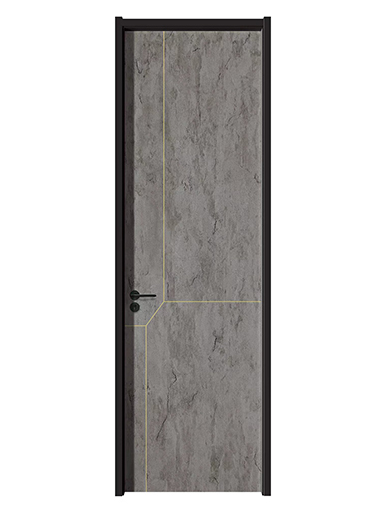
2025 Top 10 Wood Door Manufacturers
Surface Treatments Behind the Italian Metal Doors
Related Article